


Why Is The Rug Pad Important?
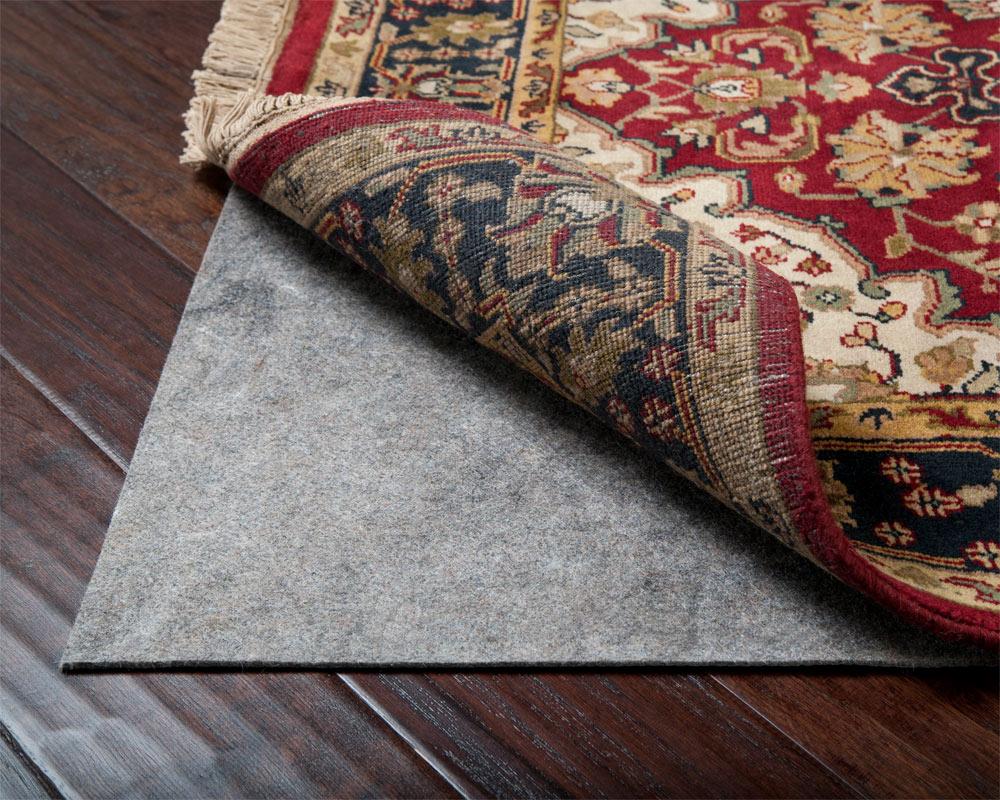
A rug pad is an important element of rug ownership, yet many rug owners do not realize its importance. Oriental and Persian rugs are investments, and when they are placed directly on top of hard tile, wood, or vinyl flooring, or even on carpet, they depreciate and wear out much faster than they would on a rug pad. Take the time to select and install a proper rug pad that is the right thickness and material to support your specific Persian or Oriental rug, and as a result, your rug will look and feel great for years to come.
Here are the primary ways in which a rug pad benefits your rug and extends its life:
1. The pad helps your rug lay flat.
A rug placed on top of carpet needs a pad to keep it from creeping, bunching, or wrinkling, all of which could cause you to trip. Likewise, a rug placed on top of wood floors, tile, cement, or other hard flooring needs a pad to keep it from slipping and sliding. Tripping over wrinkled rugs and slipping on rugs that aren’t secured can be dangerous, and are risks you take by not utilizing a rug pad. Not only that, but tripping on the rug can harm not just you, but also the rug itself.
2. The pad cushions the rug against pressure.
A pad essentially adds thickness to the rug, and forms a buffer between the fine fibers of the rug and the hard floor. A pad protects the rug from many kinds of pressure, including foot traffic, the blunt heaviness of oversized furniture, and the sharp or pointed legs and spindles of finer furniture. Unfortunately, too much cushion can also damage your rug by straining it. Your local rug cleaning company will have technicians who are able to recommend the right thickness for your specific rug.
3. The pad protects the floor beneath the rug.
The pad not only protects the rug from the flooring, but also protects the flooring from the rug. Dyes in handmade Oriental rugs may transfer or stain the flooring beneath them, and rugs made of tough fibers could possibly scratch or mar a polished wood floor. A properly placed rug pad will prevent all of this from happening.
Jacksonville FL Oriental Rug Pad Professionals
Rug pads are a vital part of protecting and caring for your Oriental rug. The importance of a proper rug pad is rivaled only by proper rug cleaning, and RugPro Oriental Rug Cleaners can take care of both! We are the favorite professional rug cleaning and pad installation company of homeowners throughout Northeast Florida, including St. Augustine, Fernandina Beach, Atlantic Beach, Ortega, Riverside Avondale, downtown Jacksonville, and more. Do your rug and your rug pad a favor and call on the Jacksonville rug cleaning professionals.
Persian Rugs Vs. Oriental Rugs
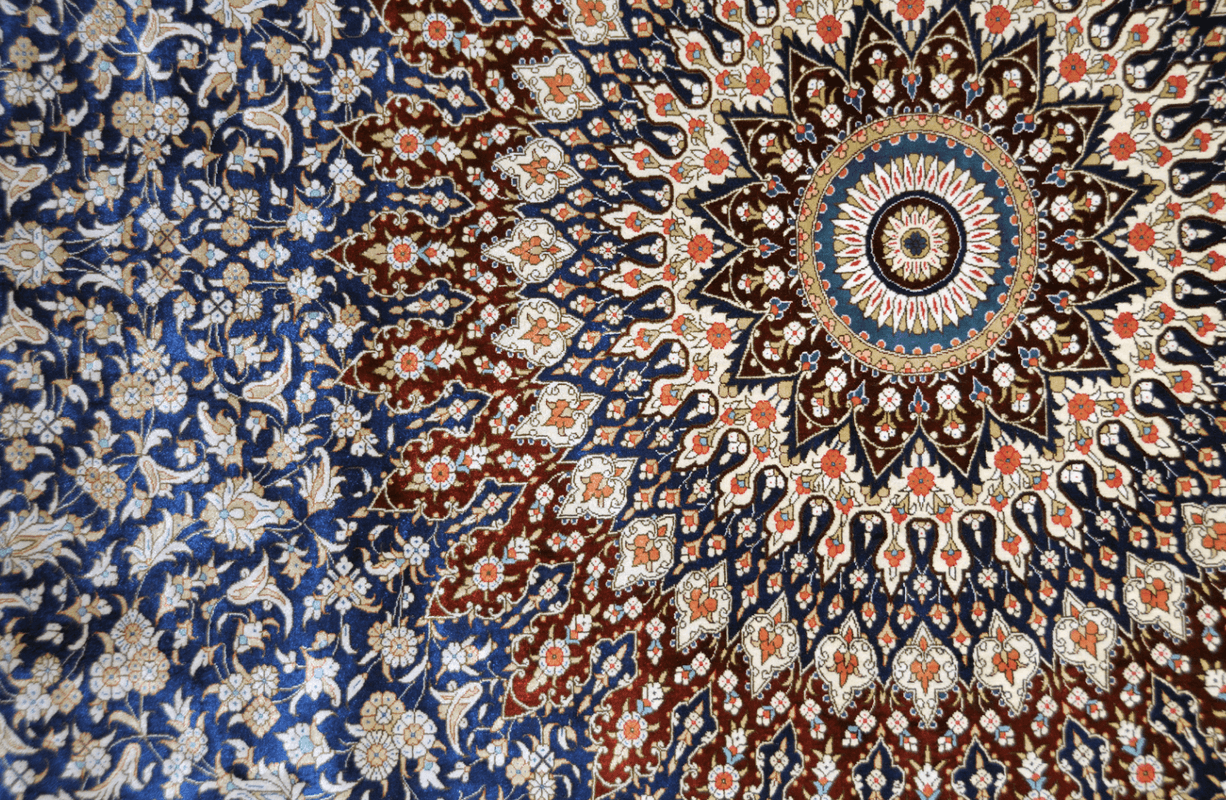
New customers often ask us about the difference between Oriental rugs and Persian rugs. The terms seem to be used interchangeably to describe fine hand-knotted rugs made of wool or silk. Many Oriental rugs and Persian rugs feature vibrant colors, soft and thick pile, and intricate borders and patterns, often with similar motifs. Likewise, true Oriental rugs and Persian rugs are hand-crafted works of art, collected and coveted by many, and displayed in museums and palaces, as well as in homes around the world. With so many similarities, it’s no wonder there is confusion in the terminology.
Removing Urine From Wool and Silk Rugs

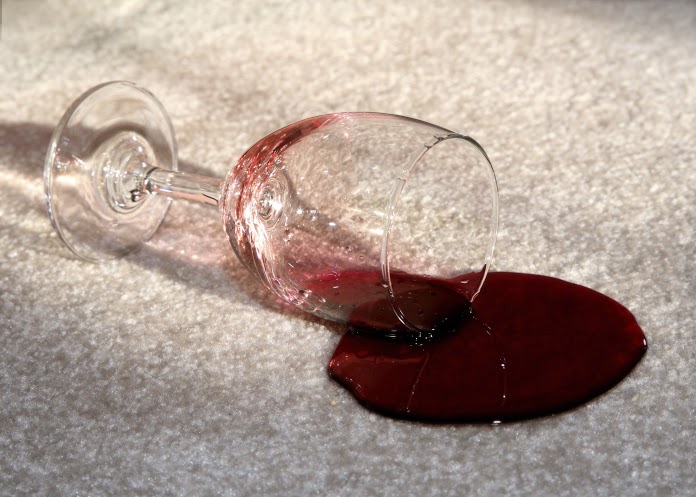
Pets are a part of many households, and in most cases, they are considered one of the family, so we don’t mind tidying up after them. However, when your dog or cat has an accident and urine gets onto your wool or silk rug, real damage can be done. It’s important to act quickly and use the right techniques to make sure your rug gets clean, with no lasting harm done. (more…)
Why Hire An Oriental Rug Cleaning Specialist?
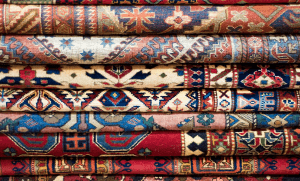
When the time comes to clean your oriental rug, whether it’s routine maintenance or a deep cleaning, it’s important to hire a rug cleaning specialist to make sure the job is done right. Your Turkish, Afghani, or Navajo rug represents an investment, and the proper cleaning will make all the difference not only in how your rug looks, but also in how long it lasts.
Wool Rug Cleaning Tips
Experts in the rug industry agree that wool is one of the best fibers to use in flooring. This natural fiber is flexible and soft, makes luxurious flooring, and even provides natural insulation. At the same time, it is durable and resists stains and dirt better than some other natural fibers. It may cost more than rugs of synthetic fiber, but a wool rug is a treasure worth investing in. When cared for properly, wool rugs last for decades and can become family heirlooms. Routine cleaning is an important way to protect your investment, and will not only keep your rug looking tidy, but will also extend its life. Between cleanings, however, stains can appear, and dirt and dust can build up. We’ve compiled a list of tips to help keep your wool rugs looking their best!
Types of Rug Construction
Rug construction is an art form that was perfected centuries ago. Early rugs were created by skilled craftsmen and studied by apprentices, and their ancient methods are still practiced today. Machinery has since been introduced as an alternative way to make rugs, but little has changed in the age-old methods of fine rug construction.
Basic Elements Of Rug Construction
Rugs are usually either tufted or woven, with a few exceptions, such as leather and animal skin. They can be made in any size, from small personal prayer rugs to vast expanses that cover the floor of an entire room. A rug may be woven or created by one person, or it may require multiple workers. The looms and frames upon which they are created can likewise be built to accommodate any size of rug. Rugs are most commonly made of wool, cotton, silk, jute, or blends of one or more. Synthetic fibers such as nylon and polyester were introduced in recent decades, and are used to create blends or reinforce contemporary rugs. Threads and yarns are richly dyed before they are used to create vivid patterns and color fields. Until the 1880s, dyes were derived from plants, minerals, and insects. Synthetic dyes were later introduced, and though their color tends to fade less than the natural dyes, many rug collectors and aficionados still prefer the look of the original style of dye.
Construction Of Woven Rugs
A woven rug is constructed using a loom as the tool to create a pattern of “warp” and “weft” yarns. Warp yarns are tightly stretched across the loom and form the lengthwise core of the rug. Weft yarns are then woven between the warp yarns. This interlacing of warp and weft forms the structure of the rug and is known as the “foundation,” and all woven rugs begin with this foundation. Most types of woven rug are then filled in with “pile” thread, which is the yarn woven among the warp and weft to create the finished product.
Types Of Woven Rugs:
1. Hand-knotted rug or Oriental rug
Oriental rug construction originated in Asia, and the weaving methods have been adopted by other countries and cultures, each adding their own distinctive patterns or style. Oriental rugs and hand-knotted rugs are constructed by forming the foundation of warp and weft, then hand-knotting thousands of knots of pile yarn onto the warp and weft into different patterns. Most of these rugs are created using one of two kinds of knot. The Persian (or Senneh) knot is made by twisting the pile and warp yarns together, making an asymmetrical pattern. The Turkish (or Ghiordes) knot, on the other hand, is made by tying the yarns, making a symmetrical pattern.
The knots on a rug are counted as a way to indicate the labor-intensity of the rug and the exquisiteness of the thread. The counting of the knots reveals the “knot density,” or the number of knots per unit of surface area (usually per square inch or square centimeter). The number of knots per unit is proportional to the quality of the carpet, though it is important to consider the material used, since knots made from silk thread would be considerably smaller than knots made from wool thread.
2. Hand-woven rug or flat-woven rug
A hand-woven or flat-woven rug consists of the warp and weft foundation, but no pile.
3. Machine-woven: In this method, the foundation and the pile are manufactured simultaneously, with pile yarns being mechanically inserted while the warp and weft yarns are being interlaced.
Construction Of Tufted Rugs
Using this construction method, a canvas is stretched onto a frame to form the foundation or backing of the rug. The design for the rug is drawn onto the canvas, and yarn pile is punched or stitched through the canvas backing to create the design. The pile comes through in loops which are then either left looped or uniformly cut. Finally, an adhesive and second layer of fabric are applied to the bottom of the rug to hold the tufts into place.
Types Of Tufted Rugs
1. Hand-tufted rug: Hand-tufted rugs are created using a handheld tool called a “tufting gun” to punch the yarn through the canvas backing.
2. Machine-tufted rug: In this method, the machine feeds yarn into the foundation backing.
Other Rug Types
Woven and tufted rugs are the most popular kinds of rug, but other types do exist.
- Braided rug – This type of rug is made by twisting yarn or fabric scraps, and braiding wool or nylon around them to make a rope or cord. The cord is then coiled and stitched together, usually into a circle or oval shape.
- Hooked rug – This type of rug is made by punching yarn through a course backing to create a looped pile pattern.
- Patchwork rug – This type of rug is created by stitching together scraps or squares of fabric to create a pattern or mosaic.
- Rag rug – This type of rug is made using scraps of fabric that have been cut on the bias and and twisted together and woven on a cotton or linen warp.
The methods used to construct rugs have not changed much over the last several thousand years, and neither has the value placed on these rugs, as reflections of history, culture, art, and craftsmanship. Fine rugs hang in museums, palaces, and archives alike, and are sought and coveted by collectors around the world. Beautiful woven and tufted rugs also decorate our own homes as flooring or wall hangings, allowing each of us to enjoy this ancient art form for ourselves.
Professional Rug Cleaning Service For Your Own Rugs
All rugs require maintenance and cleaning from time to time. The oldest method of rug cleaning is to wash by hand in a rug bath, and it is still the most effective method. Jacksonville is home to RugPro Oriental Rug Cleaning, Northeast Florida’s best Oriental rug cleaning service. Whether your rugs need to simply be dusted as routine maintenance, or whether they are in need of a thorough deep cleaning, we have the tools, the training, and the expertise for the job.
A Brief History of Oriental Rugs
History Of The Oriental Rug
The construction of carpets and rugs is an art form that goes back millennia. Scientists and historians cannot know when and where the first ones were created, since the wool, silk, and other fibers used to make the first carpets would have decayed long before they could be excavated and studied. However, a few ancient relics discovered by archaeologists give some insight into the early construction and uses of the rugs and carpets that were the predecessors of the rugs we collect and value today.
Early Rugs And Their Cultural Importance
The first rugs were dually utilitarian and decorative. Nomadic tribes moving across the plains of central Asia created these early rugs using simple and transportable two-ribbed looms. The rugs served as ground cover inside tents, as well as wraps for the people themselves during harsh winters. Many of the rugs and carpets that have since been discovered provide valuable information about these tribes and their cultures. Dyes and pigments were used in rug making, and the roots, flowers, fruits, and other materials used in these dyes enable scientists to link tribes to specific regions. Likewise, patterns and motifs that were woven into the rugs document important cultural aspects of each tribe and region, such as warriors, horses and riders, deer, and types of vegetation.
Discovery Of The Pazyryk Carpet
An excavation of an ancient kurgan, or burial ground in the Altai mountains of Siberia unearthed what is understood to be the earliest known sample of a carpet or rug. The rug has been linked to the ancient nomadic tribes of the Pazyryk Valley, but because the valley was located along an important trade route, it is not known which country created the Pazyryk Carpet itself. Many experts identify it as Armenian, though others contest that it is Persian. It was found preserved in a sheet of ice, and radiocarbon testing indicates the carpet was created around 400 B.C. The carpet is 283 x 200 centimeters and has 36 symmetrical knots per square centimeter, with motifs depicting men on horseback. The advanced weaving techniques and high quality of the Pazyryk Carpet indicate that carpet making was a well established art form long before the Pazyryk itself was constructed.
Further Development Of Carpet And Rug Weaving
Through trade, new countries and regions were introduced to the construction of rugs and carpets and began to develop their own techniques and patterns. Hand-knotting and carpet weaving flourished throughout Asia, with individual countries establishing their own techniques and motifs, and bringing up their own skilled craftsmen.
Rug making flourished throughout the Medieval period, particularly under Seljuq rule. Persia remained at the heart of its development, and by the 8th century A.D., the Persian province of Azerbaijan was the recognized capital of carpet construction and trade. By the Renaissance period, fine rugs had become synonymous with wealth, and Shahs, Sheiks, and Emperors across the continent were demanding ornate rugs for their palaces, mosques, and temples. European countries likewise valued the fine carpets from the East, and commissioned them for their own kingdoms. Persian rugs were given as gifts among royalty to commemorate important weddings or coronations, and Renaissance paintings depict Persian rugs and carpets as wall hangings and floor coverings in countless palaces and castles.
The Oriental Rug And Persian Carpet Today
Oriental rugs and Persian carpets, as they are commonly known today, are still popular investments. Rugs are often named after the village or town in which they were woven, or in the case of nomadic rugs, after the tribe itself. In the most basic understanding, however, Oriental rugs are rugs that have been hand knotted in Asia, and Persian carpets are those that come from what is now Iran. Other countries, including India, China, Russia, Turkey, Pakistan, and Nepal are all major exporters of Oriental and Persian rugs, and have established their own weaving and hand knotting industries, as well. The export of these carpets and rugs is a multimillion dollar industry, and though modern machinery has made mass production a possibility, the time-honored hand knotting, hand tufting, and traditional looms are still preferred. Oriental rugs and Persian carpets are often handmade and therefore inherently unique, and their quality makes them not only an investment for one’s home, but a work of art, an heirloom, and a piece of history to have for our own.
Fringe Brightening
Pad Installation
Perhaps the most overlooked step of good rug maintenance is installing the proper pad beneath the rug. In fact, we find that many customers who have paid good money for a very nice area oriental rug have not bothered to even put any pad at all beneath the rug to help preserve their investment. A good pad, while hidden from view, can increase the life of your rug significantly and therefore the comparatively modest investment makes good sense.


In addition to providing proper cushioning for foot traffic, which reduces wear and tear on the rug fibers themselves, a good rug pad will prevent the rug from moving around on the floor and wrinkling up, which also can accelerate wear. Keeping a rug situated squarely on the floor is a major factor in extending its life and preserving the rug’s beauty.
If you’ve had a rug with an odor problem, please keep in mind that the pad itself will also absorb the odors that were in the rug. Installing a new rug pad beneath the rug will eliminate the possibility of odor and other contaminants from transferring into your clean rug from the old pad.
Other nice features of installing a rug pad beneath your oriental rug include making the rug more comfortable to walk on and reducing the noise of foot traffic and general sound dampening in the room.
RugPro Oriental Rug Cleaning uses only the finest quality materials for your rug pad installation and it is priced very reasonably. We highly recommend that you ask about installing a new rug pad at the time of cleaning so that you can start fresh with a new pad and a clean rug!
We 100% guarantee you will be satisfied with our pad installation service in Jacksonville for a period of 1 year from installation (excluding normal wear and tear over that time period).
Moth Repellent
Moth repellant application is an important but often overlooked step in the care and maintenance of your rugs. We offer this service as an add-on to our cleaning packages and would be happy to provide you with a quote today.
Moths like to lay eggs in a cool, undisturbed area, such as in part of a rug that may be under a piece of furniture and is not vacuumed frequently enough. While the moths themselves do not eat oriental rugs, their larvae actually feed on wool, silk and some other natural materials. A moth infestation can be difficult to spot until it is too late, and repairing an oriental rug damaged by moths can be costly, so prevention is paramount.

To prevent damage from moths, by far the most important maintenance task that you can do is vacuuming. We recommend you vacuum the entire face of your rug (yes, you’ll need to move your furniture) at least weekly. On a quarterly basis, we suggest you actually flip your rug over to vacuum the back side of the rug, the pad, and the floor beneath the pad.
The second most important maintenance task you can do to protect your rugs from moths is have them professionally cleaned on a regular basis. As a part of that process, it may be a good idea to also ask your rug cleaning professional to apply a wool safe moth repellent to your rug, which is a service that we offer for a modest additional charge. Moth repellent makes your rug taste sour and uninviting to moths and their larvae, and therefore protects your rug from an infestation. Our moth repellant application uses the finest products available and we offer the application only after we have thoroughly and completely cleaned the rug, not as a standalone service.
We 100% guarantee you will be satisfied by our moth repellant application service in Jacksonville for a period of 14 days from completion of the application. Please be aware that no moth repellant can guarantee protection from a moth infestation, and we do not warranty it as such.