


What Is My Persian Rug Telling Me? Learn How To “Read” Your Rug
July 13, 2015 07:22:09pm
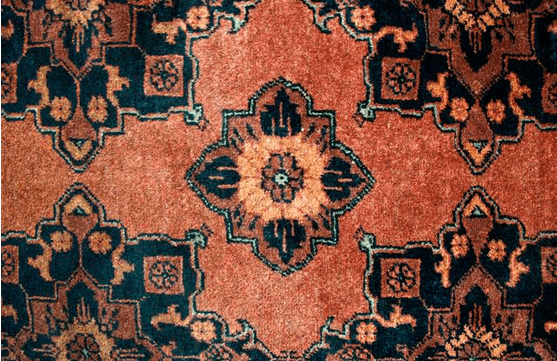
We rug collectors and aficionados are drawn to rugs for a number of reasons. For some, we love the craftsmanship. After all, Oriental and Persian rugs are made of the finest silk or wool threads, meticulously hand knotted by artisans who have spent decades sharpening their skills. For others, it’s the quality of the rug, such as the rich dyes or high number of knots per square inch. Others consider a fine Oriental rug a piece of art, and may design the entire room around the rug’s colors and patterns. Still others love our rugs because they are sound investments that, with the proper care, will become even more valuable over time. All of these reasons make each Oriental rug a true treasure!
Perhaps the most important feature of a fine Oriental rug is its history. Rug weaving is an ancient craft, with roots in many countries and across many centuries. Oriental rugs have been woven by members of nomadic tribes as well as artisans of powerful dynasties. Rugs have been used to record histories, to tell the important stories of tribes or groups of people. They were woven to commemorate great celebrations or events, including weddings and coronations, or, like prayer rugs, were woven to be part of daily life. The rich storytelling of these rugs can be interpreted today by looking at the shapes and colors used. Little has changed during the past millennia in the method of rug weaving, and likewise, the symbolism remains the same. Current designs, indeed, are informed by history, so you can examine your own rug and “read” its meaning and history.
Color
Begin by making note of the colors used in your rug. Most rugs incorporate a myriad of colors, but may have 3-5 colors used more than others. Some rugs incorporate fewer colors. Still other rugs will have a field of 1-2 colors, but then a multitude of others used in smaller amounts. Each color has its own significance. Due to their significance and meaning, many of the colors used in ancient rugmaking still inform the color choices of rugs made today.
- Red represents beauty, courage, or wealth, and a vibrant life source.
- Orange represents piety or devotion.
- Gold represents power or wealth.
- Yellow represents the sun. Yellow came to be associated with rulers and royalty, and subsequently, reserved for them.
- Green represents hope, renewal, and life. Green is also the color associated with the Prophet Mohammed, and is therefore considered holy. Green was seldom used in areas of the rug that would be walked on.
- Blue represents power or truth. Also, motifs that represent the afterlife are often depicted in blue.
- Black represents mourning and destruction.
- Brown represents fertility, as well as soil and the earth.
- White represents peace or purity, but can also represent grief or mourning.
Continue getting to know your rug by examining its motifs and symbols.
Flowers, fruit, and trees:
- A cyprus tree represents immortality.
- A lily represents purity.
- A lotus flower represents rebirth.
- A peony represents power or wealth.
- A pomegranate represents fertility.
- A tulip represents prosperity.
- A very popular motif is the Tree of Life, which represents heaven or an eternal paradise.
Animals and birds:
- A camel represents wealth.
- A dog represents trust and protection. Dogs are also shown as the protectors of people and places of nobility.
- A dove represents peace.
- Fish represent prosperity and abundance.
- A lion represents victory.
- A parrot represents escape from danger.
- A peacock represents immortality or divine protection.
- A ram’s horn represents male fertility, strength, and bravery.
- A stag represents a long life.
When you take the time to “read” your rug, you’ll find it’s even more of a treasure than you thought! Finding symbolisms repeated in your rug that have been used for thousands of years creates a very literal connection to the past. Your rug tells a story, and chances are, the story is informed by a deep history and filled with rich symbolism and meaning.
Keep Your Treasured Oriental Rug Clean
The cardinal rule of rug ownership is that if you want to preserve your Oriental rug, you need to keep it clean. A professional deep cleaning followed by regular maintenance cleanings will keep dirt, dust, and debris at bay, and ensure your rug will be in the family for years, and most likely, for generations. If your heirloom Oriental rug has been bundled in the attic for the past decade, the best professional rug cleaner will know the best methods for restoring your rug so that it can be enjoyed again. If your rug is a mainstay in your home and used daily, you’ll want to get the dirt and dust removed regularly in order to protect and preserve the fine fibers. Even if your rug does not receive much foot traffic, or perhaps is even used as a wall hanging, it will still accumulate dust and allergens from the air, so having it regularly dusted will ensure your home stays even cleaner. Trust your own Persian or Oriental rug to a good Northeast Florida rug cleaning company that knows how to remove the dust from deep within the fibers, and provide a gentle but extremely thorough wash in a professional rug bath. If you live in downtown Jacksonville or the surrounding suburbs of San Marco, Mandarin, Riverside Ortega, or along the beaches, RugPro Oriental Rug Cleaning is the best local rug cleaning service, and the company to trust with your Oriental rug.